


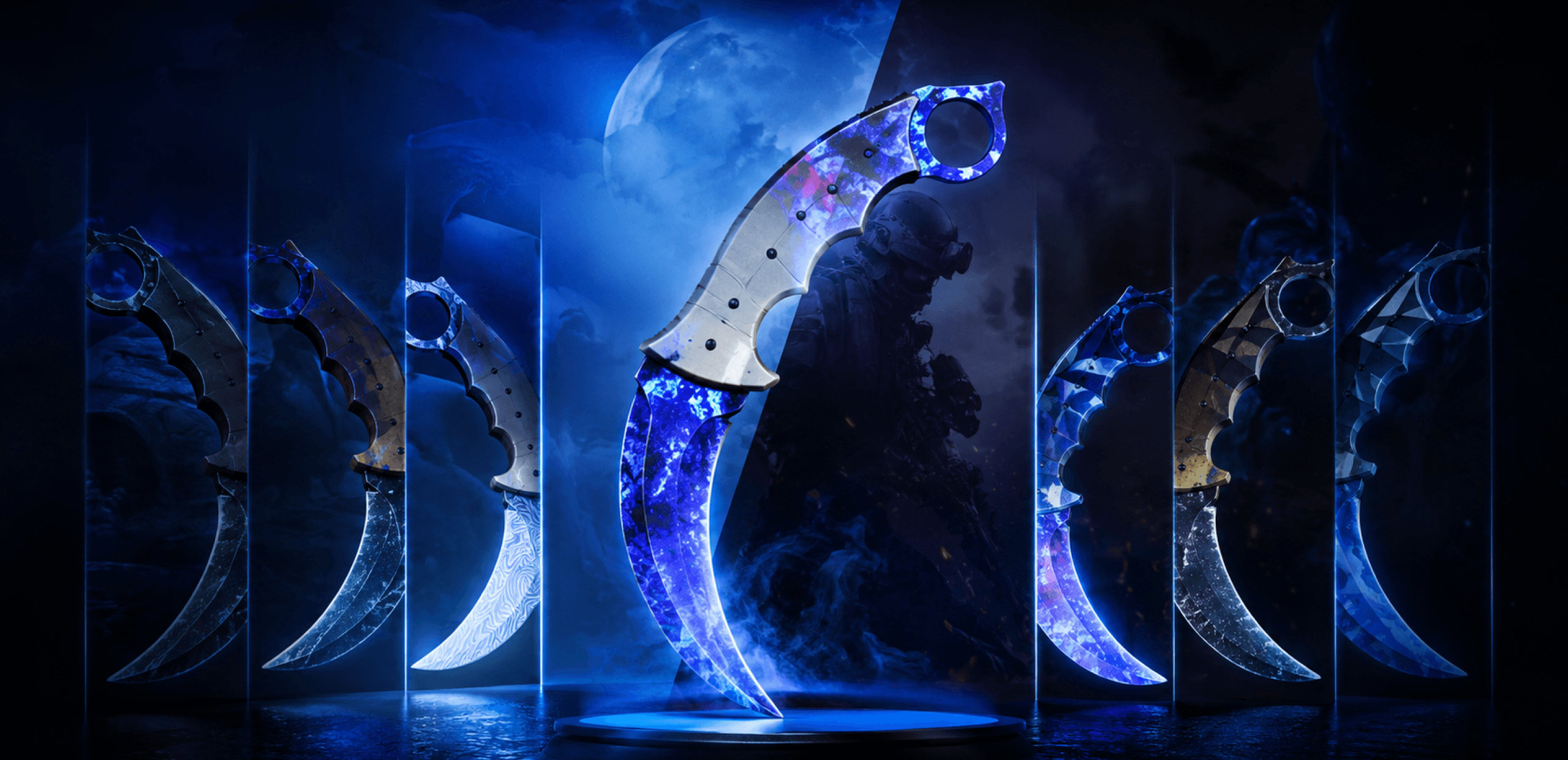

Talon Knife in CS2: Skins, Patterns and Price
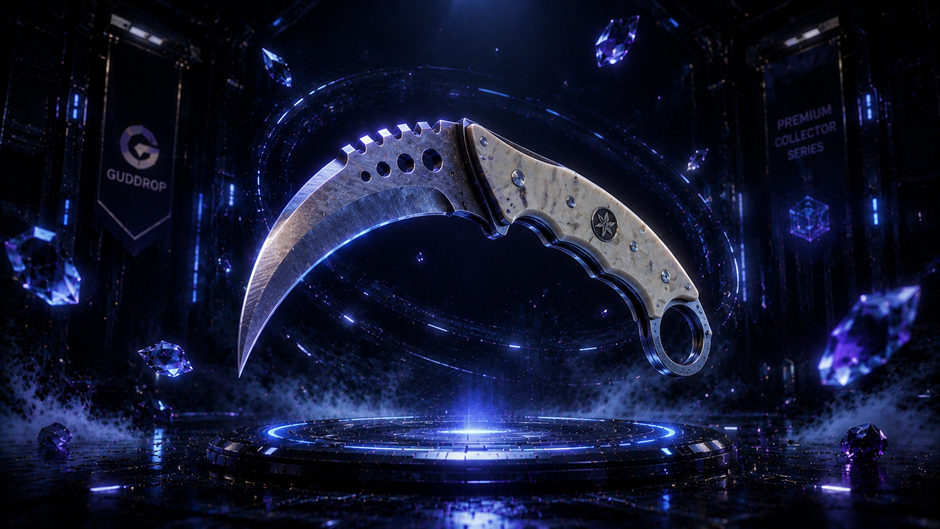
The Talon Knife CS2 skin catalog runs from entry-level options around $280 to pattern-dependent variants priced above $8,000. That range exists on the same knife type because some skins are priced primarily by float condition, while others are priced primarily by pattern index – and those two systems produce very different outcomes on identical base skins.
This article covers every significant Talon Knife skin, explains the pricing logic behind each one, and outlines what to look for when comparing options within the same finish.
What Is the Talon Knife in CS2?
The Talon Knife has a curved blade with a tanto-style tip – the spine drops sharply toward the point rather than following the edge curve, which produces the hooked silhouette the knife is named after. That geometry distinguishes it from the Karambit, which curves inward along the full blade length. The Talon Knife curves primarily at the tip, leaving the mid-blade section relatively straight.
The knife was added to CS:GO in the 2018 «A New Horizon» update alongside several other new knife types. Its inspect animation includes a spinning sequence where the knife rotates around the finger – a more active idle than most CS2 knives outside the Karambit. That animation visibility during play is part of what pushed the Talon Knife in CS2 into consistent high demand after release.
Among Covert-tier knives, the Talon Knife sits in the upper-mid range by price – above entry-level options like the Gut Knife or Navaja, below the Karambit and Butterfly Knife at the top of the hierarchy. The blade geometry also affects how finishes display: the curved tip and spine serration produce pattern distributions that differ noticeably from flat-bladed knives at the same float value.
Talon Knife Skins Overview
Talon Knife CS2 skins divide into two pricing categories based on what drives their value. Standard skins are priced primarily by float condition – Factory New copies trade at a premium over Field-Tested, and the pattern index has little or no effect on price within the same wear grade. Pattern-dependent skins work differently: the pattern index assigned at unboxing determines the color distribution or web configuration on the blade, and that distribution can move the price by a factor of two, five, or more compared to a baseline copy at the same wear grade.
That distinction explains why two copies of the same Talon Knife finish can list at completely different prices. Before comparing options, identifying which category a skin belongs to determines which variable to evaluate first.
Standard Talon Knife Skins
For these skins, float is the primary price driver. Pattern variation exists but does not produce significant price differences between copies at the same wear grade.
Talon Knife | Vanilla
No finish is applied to the Vanilla – the blade is bare steel with a factory grind visible across the surface. Without a pattern or color to evaluate, float becomes the only visual variable between two copies. A low float within Factory New produces a cleaner, more uniform surface than a high float at the same wear classification. Factory New copies trade around $320-$360, with Minimal Wear sitting around $300-$330. Among standard Talon Knife CS2 options, Vanilla is the one where float position within a wear grade carries the most direct price consequence.
Talon Knife | Damascus Steel
A layered water-pattern finish runs across the blade, referencing the surface texture of historically forged Damascus steel. The pattern repeats consistently across the blade without significant variation between copies. That consistency makes it a predictable entry-level option – what you see in one copy is close to what you get in another at the same wear grade. Factory New copies trade around $300-$380, Field-Tested around $280-$320. Among entry-level finishes for the Talon Knife, Damascus Steel offers recognizable surface detail at the lower end of the price range.
Talon Knife | Tiger Tooth
Yellow and black banding runs across the blade in a high-contrast pattern that holds visual clarity across wear grades. The Talon Tiger Tooth is one of the most consistently demanded standard finishes for this knife type – the color contrast reads clearly during the spinning inspect animation, which is a relevant factor given how frequently that animation runs during play. Factory New copies trade around $480-$560, Minimal Wear around $450-$510. The Talon Tiger Tooth sits at the upper end of the standard category, where demand keeps prices stable across market cycles.
Talon Knife | Marble Fade
A gradient of red, blue, and purple in a marbled texture runs across the blade. Pattern assignment produces variation between copies: the Fire & Ice configuration, where red and blue appear in roughly equal proportions with minimal purple, trades above standard Marble Fade copies at the same wear grade. That pattern premium places Talon Knife Marble Fade at the boundary between standard and pattern-dependent pricing – most copies trade by float, but Fire & Ice copies command an overpay that reflects the pattern specifically. Factory New copies range from $650 to $735, with Fire & Ice reaching the upper end and occasionally above.
Pattern-Dependent Talon Knife Skins
For these skins, the pattern index assigned at unboxing determines the visual result on the blade – and that result drives price as much as or more than float condition. Two copies of the same finish at the same wear grade can differ significantly in price based solely on which index was assigned. Float still matters, but it adjusts the price within a tier set by the pattern rather than being the primary variable.
Talon Knife | Fade
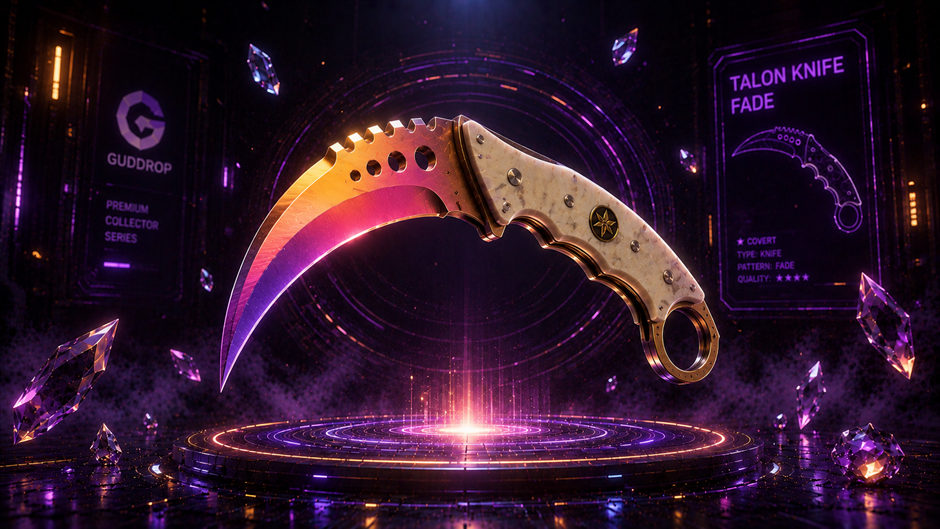
A gradient runs from yellow at the handle toward pink and purple at the tip. The fade percentage – how completely that gradient covers the blade without plain steel interruption – is the primary price variable for Talon Knife Fade. A 100% fade shows the full gradient across the entire blade. Partial fade copies show a section of uncolored steel near the handle, which reduces the visual completeness of the finish. Factory New Talon Knife Fade copies at 100% trade around $900-$980, while partial fade copies at the same wear grade sit around $750-$820. That gap reflects the pattern index directly – no float difference, only coverage.
Talon Knife | Doppler
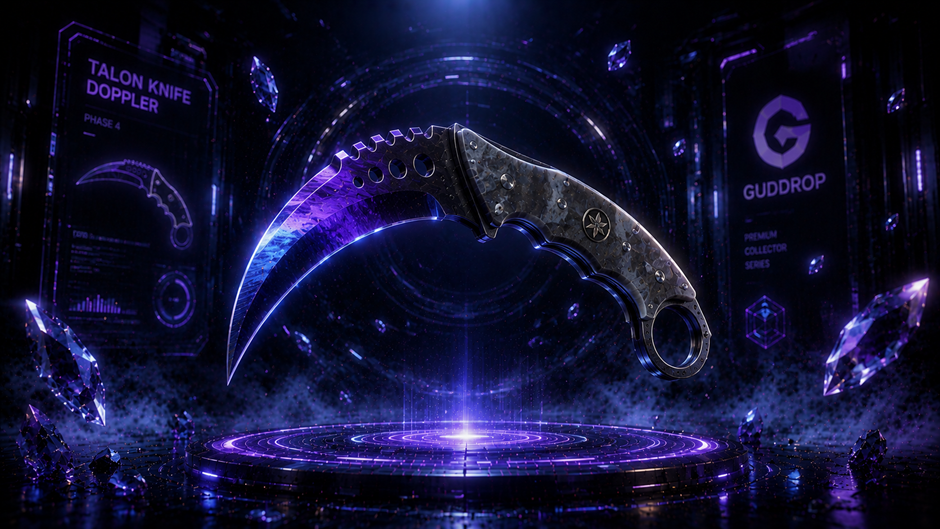
The Talon Knife Doppler finish produces different color distributions across the blade depending on which phase is assigned at unboxing. Phases 1 through 4 each produce a distinct balance of pink, black, blue, and purple. Phase 2 – predominantly blue – and Phase 4 – high-contrast pink and black – trade above Phase 1 and Phase 3 among standard phases. Above all standard phases sit three special variants: Black Pearl, Ruby, and Sapphire. Sapphire produces near-complete blue coverage across the blade and commands the highest prices in the Doppler family. Standard Talon Knife Doppler phases in Factory New trade from $500 to $900 depending on phase. Sapphire and Ruby copies trade from $2,600 to $3,500 and above, with the gap reflecting full color coverage versus mixed phase distribution.
Talon Knife | Case Hardened
Case Hardened applies a heat-treatment finish producing a mix of blue, gold, and purple across the blade. The color distribution is determined by pattern index – most indexes produce predominantly gold and purple results. Indexes where blue dominates the p-side of the blade are classified by the community as Blue Gem variants and command significant price premiums over standard copies.
Pattern #583 is among the most recognized Blue Gem configurations for the Talon Knife CS2 – it produces high blue coverage on the p-side, which is the side visible during standard in-game animations. A standard Case Hardened copy in Factory New trades around $1,400. Blue Gem copies with top-tier pattern indexes trade from $4,000 to $8,600 and above depending on the specific index and wear grade. The price gap between a standard copy and a Blue Gem copy at the same float reflects the pattern index entirely.
Talon Knife | Crimson Web
A red base finish with web patterns distributed across the blade surface. For Crimson Web, price is determined by two factors: how many web centerpoints appear on the p-side, and where they are positioned. A web centerpoint located at the center of the visible blade surface is the most desirable configuration – it places the defining visual element of the finish in the most prominent position during inspect and idle animations. Copies with a single centered web on the p-side trade at a premium over copies where webs appear near the edges or primarily on the a-side. Float interacts with pattern on Crimson Web: higher wear introduces surface scratching that partially obscures web detail, which compounds the price effect of a weak web configuration.
How Float Affects Talon Knife Prices
For standard Talon Knife skins, float is the dominant pricing variable. Factory New and Minimal Wear copies trade at a clear premium over Field-Tested and above. On finishes like Damascus Steel and Tiger Tooth, the surface condition affects how clearly the pattern reads across the blade – scratching and wear marks accumulate on the curved sections and serrated spine as float increases, which reduces visual definition on those areas specifically.
Vanilla is the most float-sensitive standard finish because there is no pattern to draw attention away from the surface condition. The bare steel blade shows wear texture directly, with no color or artwork to compensate. Two Factory New Vanilla copies with different float positions within the FN range are visually distinguishable, and that difference is reflected in price.
For pattern-dependent skins, the relationship inverts. A Talon Knife Doppler Sapphire in Field-Tested condition trades above a Phase 1 copy in Factory New – the phase assignment overrides the float grade as the primary value driver. The same logic applies to Case Hardened: a Blue Gem index at higher wear trades above a standard index in Factory New. Float adjusts the price within a pattern tier but does not move a weak pattern above a strong one regardless of wear grade.
Talon Knife Fade sits between the two systems. Fade percentage is determined by pattern index, so it follows pattern-dependent logic at the top end – a 100% fade in Field-Tested trades above a partial fade in Factory New. Within the same fade percentage, float then applies as a secondary variable in the standard way.
The Cases section on GudDrop lists knife drops across multiple finish types – checking which cases currently include Talon Knife in the pool is the starting point.
How to Get a Talon Knife on GudDrop
GudDrop carries cases with Talon Knife drops confirmed in the platform's case contents. The Drone Swarm case lists Talon Knife | Damascus Steel and Talon Knife | Urban Masked among its contents – both accessible through standard case opening on the platform.
Opening either case follows the same flow: log in via Steam, add balance to your account, select the case, and press Open. The drop is assigned automatically and appears in your GudDrop inventory. If a Talon Knife CS2 drop occurs, the specific finish and pattern index are revealed at that point – there is no way to know either in advance.
GudDrop also carries platform-exclusive cases alongside standard CS2 cases. Each case lists its full contents before opening, including which knife types and finishes are in the pool. Checking that content list before committing balance confirms whether a specific finish is available through that case or whether a different case covers the target finish more directly.
The Drone Swarm case on GudDrop is the confirmed entry point for Talon Knife drops on the platform.
5 minutes read

Rare Skin Collection: Beyond the Game
7 minutes read
Karambit Blue Gem in CS2: Patterns, Prices and How to Get One
7 minutes read
The Best AWP Skins in CS2 in 2026: From Duality to Dragon Lore
11 minutes read

