



Which CS2 Cases Drop Knives and Which Ones Are Worth Opening in 2026
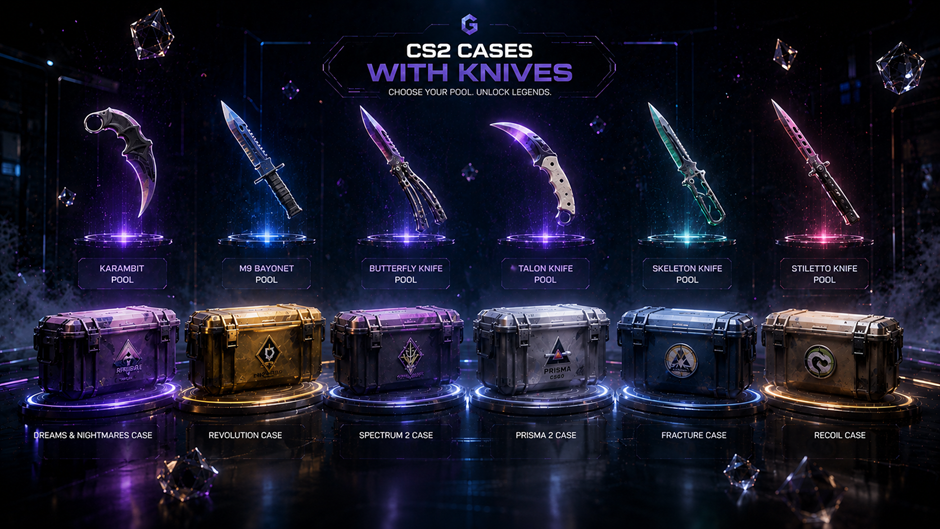
Every CS2 case has roughly the same knife drop rate – about 0.26%, or one knife per 385 openings on average. What differs between cases is which knives can drop. Each case contains a fixed knife pool, and that pool is the only variable you can actually control before opening. If a specific knife type is the goal, the case selection comes first.
This article breaks down which CS2 cases with knives cover each knife type, which cases make sense at different budgets, and how to think about opening versus buying directly.
How Knife Drops Work in CS2 Cases
The knife drop rate in CS2 sits at approximately 0.26% per case opening – roughly one knife per 385 openings. That rate applies uniformly across all CS2 cases with knives, regardless of the case price or the value of the knives in the pool. Opening an expensive case does not improve the probability of a knife drop.
What the case does determine is which knife types are available when a knife drops. Each case has a fixed knife pool established at release. A Karambit can only drop from cases that include it in that pool – opening a case without it in the list produces no Karambit result regardless of how many times you open it. That fixed pool structure is why case selection matters before the first opening, not after.
Active Drop Pool vs. Discontinued Cases
Cases in the active drop pool can appear as post-match drops during normal CS2 play, which keeps a steady supply of those cases entering the market. That supply pressure holds prices relatively stable. The Recoil Case and Revolution Case are current examples of active pool cases – both accessible at low cost per unit.
Discontinued cases were removed from the active drop pool at some point and can only be obtained through market purchases. With no new supply entering from drops, prices on discontinued cases trend upward over time as existing stock is opened and removed from circulation. Operation Breakout is the clearest example: originally the primary source of the Butterfly Knife, it now trades significantly above its original price. That cost difference affects the total price of opening – case price plus key cost – which is why discontinued cases often price players toward newer alternatives that cover the same knife types.
Cases to Open If You Want a Specific Knife Type
The standard approach – picking a case and hoping for a knife – ignores the pool structure. A more direct method is to identify the knife type first, then find which cases include it. That shift changes which cases are even worth considering.
Butterfly Knife Cases
Two cases currently give access to the Butterfly Knife at meaningfully different price points. The Dreams and Nightmares Case is the more accessible option – case price is low relative to most knife-containing cases, and the knife pool includes the Butterfly Knife alongside Gamma Doppler as one of the available finishes. Spectrum 2 Case is the alternative: it carries Doppler and Marble Fade finishes for the Butterfly Knife, but the case trades at a higher price per unit. Players targeting a specific Butterfly Knife finish should check which finishes each case supports before committing – the Dreams and Nightmares Case covers Gamma Doppler, while Spectrum 2 covers standard Doppler phases.
Karambit and M9 Bayonet Cases
Karambit and M9 Bayonet appear across multiple cases, but the most relevant for current finishes are the Recoil Case and the Revolution Case. Both are active pool cases with low per-unit cost, and both carry Karambit and M9 Bayonet in finishes that trade at current market rates. The Kilowatt Case also includes Karambit in its knife pool and sits in the active drop pool, making it another low-cost entry point for that specific knife type. The Revolution Case knife pool additionally includes finishes like Doppler and Fade – higher-value targets within the Karambit pool specifically.
Skeleton, Nomad, Paracord and Survival Knife Cases
All four of these knife types are exclusive to the Fracture Case – they do not appear in any other CS2 case knife pool. That exclusivity means the Fracture Case is the only route to these knives through case opening. The case trades at a relatively low price point, and the knife pool covers modern finishes including Fade and Crimson Web across all four types. For players targeting any of these four knives specifically, the choice of case is straightforward.
Talon, Stiletto and Ursus Knife Cases
Talon Knife, Stiletto Knife, and Ursus Knife are all available through the Prisma 2 Case. The case sits in a mid-range price bracket – higher than Fracture but below premium discontinued cases. All three knife types share the same pool within that case, which means the knife type that drops is determined randomly from among them. Players with a preference for one specific type among the three should factor that into their expected cost per targeted drop.
Kukri Knife Cases
The Kukri Knife is one of the most recently added knife types in CS2 and is available through the Gallery Case. As a newer case with a newer knife type, the skin selection for Kukri is smaller than older knife types with longer market histories. The Gallery Case is relevant for players specifically interested in recent additions to the CS2 knife roster rather than established types with wider finish availability.
Best Budget Cases to Open for Knives in 2026
Budget case opening involves three numbers: the case price, the key cost, and the likely value range of the knife that drops. Key cost is fixed across all standard CS2 cases. Case price and knife pool value are the variables that determine whether a case makes sense at a lower budget.
Fracture Case
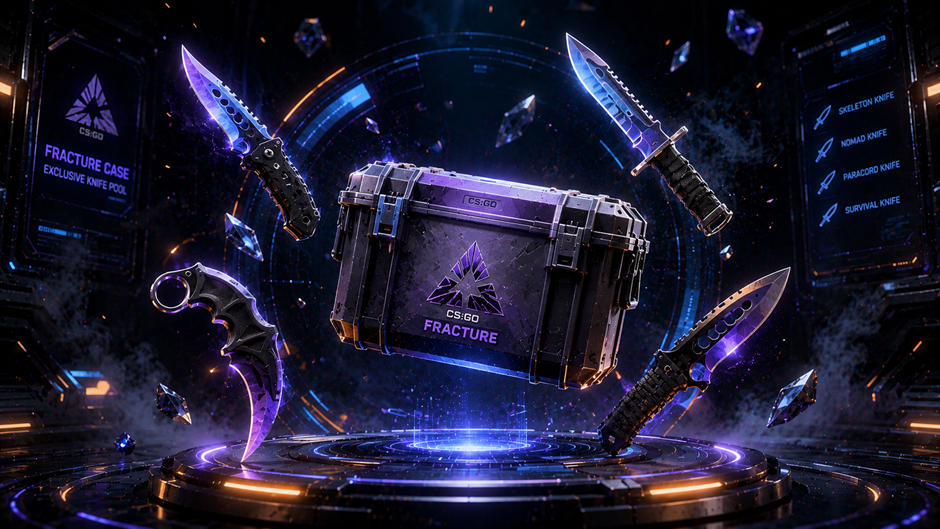
At one of the lowest case prices among current knife-containing options, the Fracture Case offers access to four knife types that exist nowhere else in the CS2 case catalog – Skeleton, Nomad, Paracord, and Survival Knife. That exclusivity has a practical implication: players who want any of these four types have no alternative case to open. The knife pool includes modern finishes across all four types, with Fade and Crimson Web among the more valuable outcomes. Total opening cost per attempt stays low relative to premium cases, while the potential knife value on a successful drop reflects current market rates for those exclusive types. Among CS2 cases with knives in the budget category, Fracture covers the widest range of exclusive knife types at the lowest entry cost.
Dreams & Nightmares Case
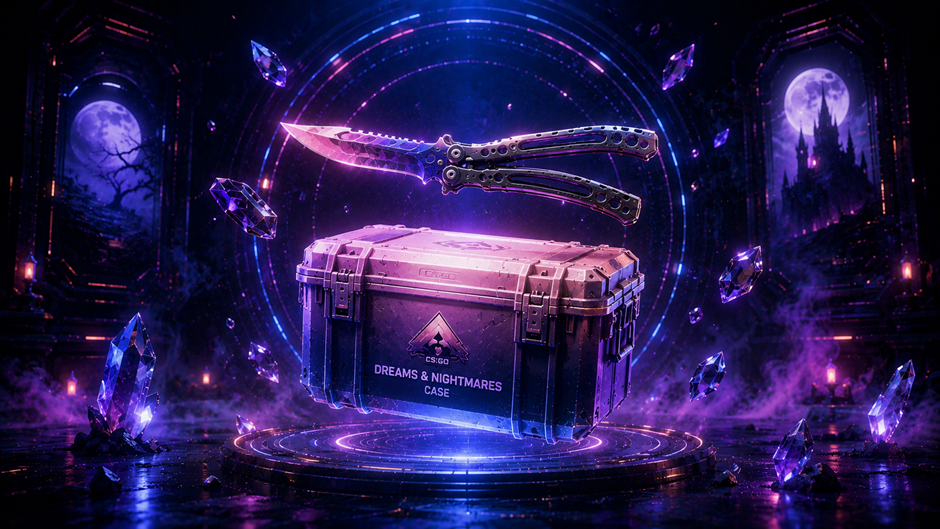
The Dreams and Nightmares Case is currently one of the lowest-priced cases that gives access to the Butterfly Knife – a knife type that otherwise requires significantly more expensive cases to target. The knife pool includes Butterfly Knife in Gamma Doppler finish, which sits in the premium finish tier for that knife type. Case price per unit is low enough that the total opening cost per attempt stays accessible relative to the value of a successful Butterfly Knife drop. For players specifically targeting a Butterfly Knife without the budget for discontinued premium cases, the Dreams and Nightmares Case is the most cost-efficient current option by case price alone.
Premium Cases: Higher Cost, Iconic Knives
Some cases trade significantly above standard market price because the knife pool contains types or finishes with sustained high demand. The cost per opening in this category reflects that premium directly.
Operation Breakout Weapon Case
The Breakout Case is the original source of the Butterfly Knife in CS2 – it was the first case to include the knife type when it was introduced. That historical position gives it collector relevance beyond the knife pool itself. The case is discontinued, which means no new copies enter circulation through drops. Market price has increased over time as existing stock is opened and removed. The Breakout Case knife pool covers Butterfly Knife finishes including Fade and Doppler, but the per-unit cost of opening now sits well above the Dreams and Nightmares Case for the same knife type. Players targeting Butterfly Knife at lower cost have a functional alternative in the active pool – the Breakout Case is relevant primarily for collectors or players specifically interested in its finish selection.
Recoil Case and Revolution Case
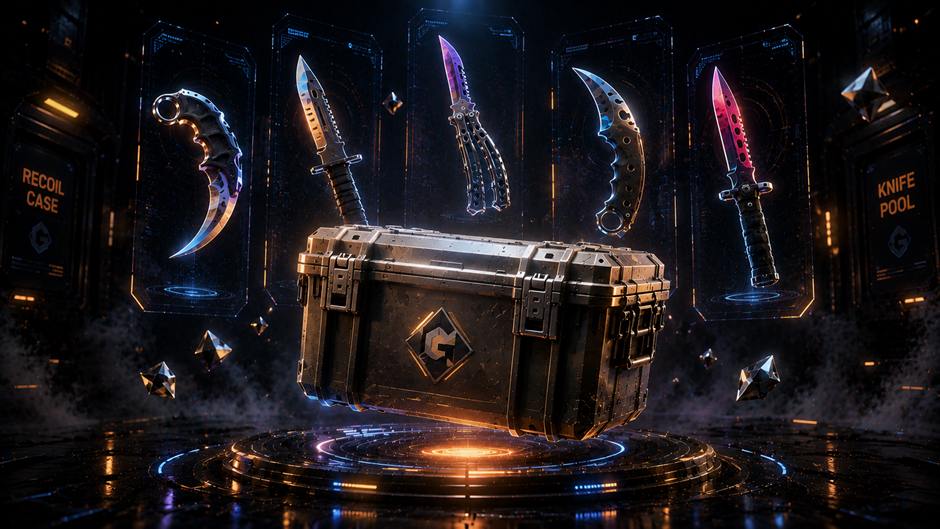
Both the Recoil Case and the Revolution Case are active pool cases with knife pools that include Karambit and M9 Bayonet alongside other high-demand types. The Recoil Case knife pool covers finishes including Doppler, Fade, and Case Hardened across its knife types – the full range of high-value outcomes for Karambit specifically. The Revolution Case similarly carries Karambit and M9 Bayonet with a finish selection that includes Doppler and Marble Fade. Both cases trade at accessible per-unit prices relative to their knife pool value, which makes them the current standard reference points for premium knife hunting without the cost premium of discontinued cases.
GudDrop carries cases across multiple price categories with documented knife pools – the Cases section shows what is currently available before you open anything.
Should You Open Cases or Buy the Knife Directly?
Opening CS2 cases with knives and buying a knife directly are two different activities with different expected outcomes, and the choice between them depends on what you are actually trying to achieve.
Case opening is a high-variance activity. The knife drop rate is 0.26% per opening – most sessions produce no knife regardless of how many cases are opened. Each opening is independent, so prior results have no effect on the next one. The value of the experience is in the process itself: the randomness, the possibility of a rare outcome, the accumulated drops along the way. Players who open cases for that reason are using them as intended.
Direct purchase produces a specific result at a known cost. If the goal is to own a particular knife in a particular finish and wear grade, buying it removes the variance entirely. The cost is the market price of that item – no more, no less. There is no possibility of a better outcome, but also no possibility of spending multiples of the knife's value without getting one.
The practical distinction is this: case opening makes sense when the process has value to you independent of the knife outcome. Direct purchase makes sense when the knife itself is the goal and the path to it is not. Neither approach changes the underlying knife drop rate or the market price of the knife – those are fixed reference points that apply equally to both decisions.
Open CS2 Cases on GudDrop
GudDrop offers both standard CS2 cases and platform-exclusive cases, each with a documented knife pool visible before opening. The platform carries cases across the full price range – from budget options like the cases covering Fracture-type knife pools to higher-cost cases targeting premium knife types.
Opening a case on GudDrop follows a straightforward flow: log in via Steam, add balance to your account, select a case from the catalog, and press Open. The drop is assigned automatically and appears in your GudDrop inventory. From there, any knife that drops can be transferred to Steam using the Trade URL configured in your account settings.
The platform-exclusive cases on GudDrop are separate from the standard CS2 cases with knives in the Steam ecosystem – they have their own knife pools and price points. The Cases section on GudDrop shows the full content list for each case before you commit to opening, which makes it possible to confirm which knife types are in the pool and at what cost per attempt.
The Cases section on GudDrop is the starting point for checking which knife types are currently available and at what price per opening.
9 minutes read

What Hardware You Need for CS2 in 2025: Building the Perfect PC to Win
5 minutes read
How to achieve a green Trust Factor in CS2 and forget about toxic teammates
6 minutes read
Reduce Ping and Lags in CS2: Practical Tips for Optimizing Internet Connection and Network Settings
9 minutes read

